

KILLING ISIS
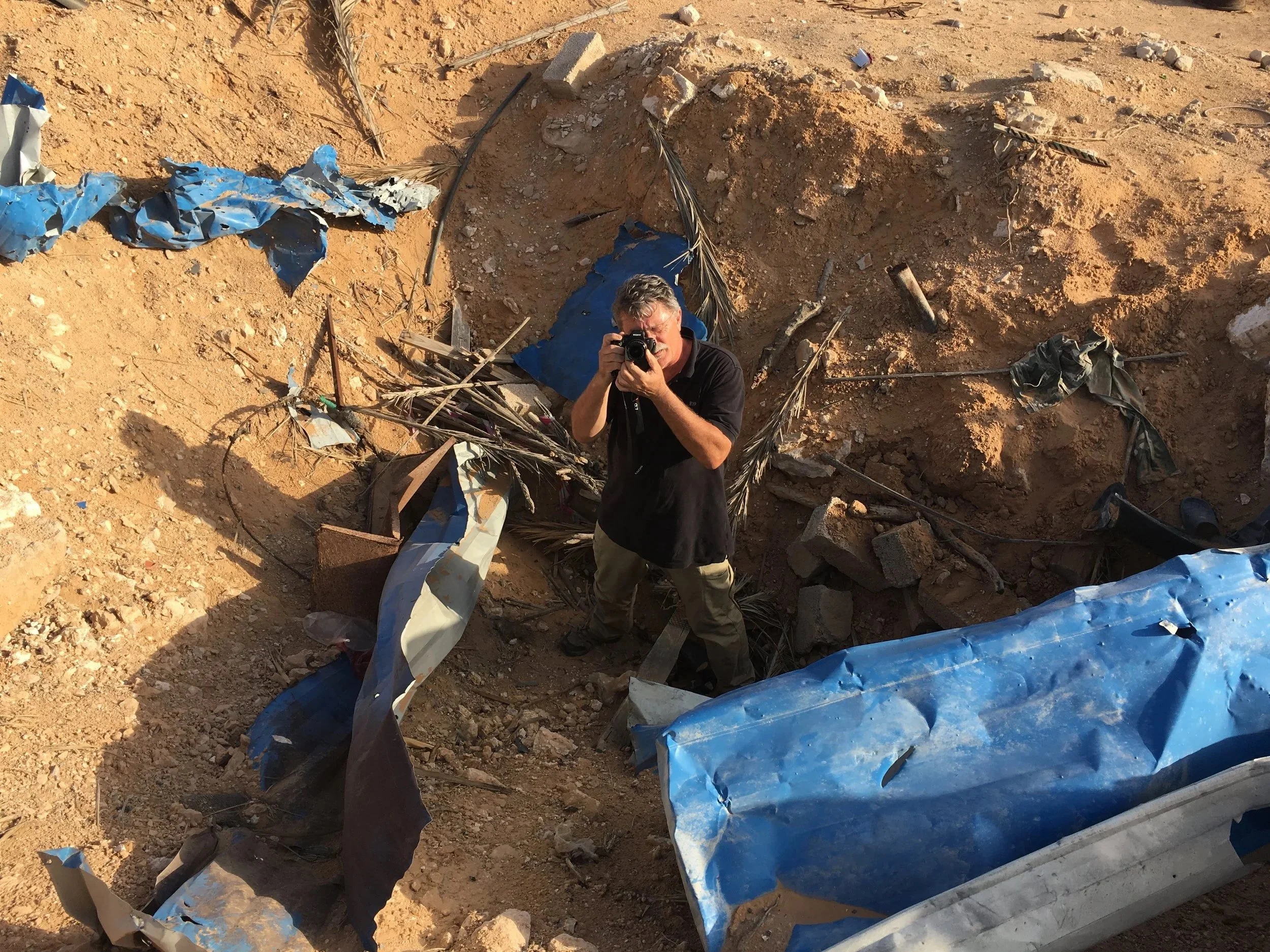
A recently bombed ISIS training camp is just on the outskirts of Sabratha. A flaming hoop and some ISIS memorabilia probably won’t make it back through customs.
Pelton gets a front row seat in LIBYA to understand AMERICA’s lATEST war on TERROR
At first, America tried to ignore ISIS. An Iraqi outgrowth of al Qaeda, it started in 2004 when escaped prisoners from Camp Bucca formed the Sunni group that became the Islamic State. It metastasized into Syria in 2013. By August 2014, American journalists James Foley and Steven Sotloff, both ex-Rangers, were brutally decapitated by ISIS in Raqqa. It didn’t help that over 40,000 Christian Yazidis were trapped on a waterless hilltop, begging the world for help.
President Obama looked at his options to eliminate ISIS. The 2011 idea of training “moderate rebels” in secret bases in Jordan, under a program called Timber Sycamore, had been a disaster. A trainer explained that from the intake of thousands of Syrians and Jordanians, they fielded less than 20, “And that was more like a dozen.” Most of whom were quickly compromised or joined better-armed Islamic militias. Weapons shipped en masse by Gulf nations, destined to support anti-Assad groups, ended up in the hands of terrorists.
In January 2014, hard-won cities like Fallujah and Ramadi fell to the Islamic State, and in June 2014, Mosul and the oil-refining town of Baiji fell as well. The Islamic State was on the verge of establishing a caliphate across Iraq and Syria.
Training and arming moderate rebels had failed miserably; there had to be another way. Why not repeat the post-9/11 scenario? Link Green Berets with local militias and bring in overwhelming air power to pulverize the enemy. In 2014, another plan was hatched; “Nine Dot Three,” a covert action group that linked the CIA, CAG, Special Forces, and the Air Force, based in Qatar. A secret program that only emerged when the team suffered casualties, including the IED that killed CAG operator Master Sgt. Jonathan J. Dunbar and British SAS trooper Sgt. Matt Tonroe.
ISIS had been created by Sunnis angry at the Shia and Iranian control of the Iraqi government. Funded by Iraqi Sunni tribes who controlled trade and by Saudis, Qataris, Emiratis, and Gulf millionaires, they had used violence and terror to quickly work their way up the Tigris and Euphrates rivers. By August 2014, their caliphate was headquartered in Raqqa, and the violent group began creating some of the most gruesome execution videos in recent history.
Obama handed over the mission to special operations. They quickly conducted a 14-day recce and set up safe houses and operational centers. CAG, also known as Task Force, coordinated with the CIA and Green Berets and arrived on scene to train the YPG, the Syrian Kurdish group that was immune to ISIS infiltration.
Al Uideed Air Base in Qatar was quickly ramped up to handle a massive air campaign that included coordinating everything from Reaper drones to B-52s. By 2015, there were 10,000 Americans on the sweltering air base 35 clicks south of Doha. By April 2016, the base was the center for killing ISIS. All they needed were eyes on the ground.
The early fight against ISIS was aided by the Task Force’s familiarity with the area. Many had operated in Iraq, Kurdistan, and around Mosul in the Sunni Triangle, where Saddam’s Anbari supporters held sway. In addition to a large ground network of informants and spies, they had the infrastructure America had built on their side. The problem was where to start. The CARVER Matrix was a big part of choosing where to strike first. The simple 6-column by 5-row chart uses Criticality, Accessibility, Recuperability, Vulnerability, Effect, and Recognizability. Once the operator jots down the numbers based solely on his perception of the battlefield, choices are made.
Civilian casualties were a concern. ISIS used civilians as human shields, hoping it would turn the population against the West. Operators were smarter than that. They went after the banks, a brilliant move that drained hundreds of millions of dollars from ISIS coffers. They would be hit at night. “I wanted enough to leave rubble; the Air Force delivered enough to leave dust,” one insider remembers. Cyber warfare and high-tech weapons played a big part. The Reaper was in plentiful supply; sometimes half a dozen were available for persistent surveillance on targets. The 66-foot aircraft could be outfitted with a variety of weapons that could be laser-designated or locked onto targets using GPS coordinates within 5 meters.
CAG is normally known for door-kicking and anti-terrorism involving civilians. Now they would become targeteers. Working out of the LaFarge cement factory in al Raqqa province and linking up with local ground networks to identify, confirm, and destroy ISIS assets and personnel in a withering air campaign. Only one direct action operation took place against a prison. Manned and unmanned ISR was pushed forward so that operators could watch a wall of screens both night and day in the hunt for ISIS. It was not difficult. We did between three and 20 strikes a day, says one operator. All by remote control, coordinating with a local on the ground whose movements and signals were being watched in real time. Once the target was confirmed and there were no civilians nearby, death whistled down from 20,000 to 30,000 feet.
By January 2016, the world was watching video of “ISIS cash” being blown up and fluttering to the ground. “It wasn’t ISIS” cash…it was reconstruction cash” is the best way to describe it. Removing ISIS meant destroying the infrastructure, people and money that supported it.
Just like late 2001 in Afghanistan, this was to be a standoff war. The weapons used were typically smart bombs and missiles. Bombs as large as 2000 lb GBU-31V3 bunker busters (used on the banks in Mosul) and missiles as small as a G with a 13 lb warhead, pointed directly at a target’s head. “Something designed to kill the driver of a car or somebody on a rooftop without delivering a large blast radius.” Although the targeteers liked to be surgical, they submitted their bomb loads and plans to the Agency and down to the Air Force for approval. What came back from the Air Force in Qatar were exponential increases in ordnance and runs. A target specced for one load of four bombs would come back with a grid requiring twenty. Forty was what one Air Force specced, even though the initial ask was for four. ISIS was going to get killed. At this point, ISIS was making it easy to be killed. “They controlled the towns, the civic centers, and drove around waving ISIS flags. It wasn’t that hard,” says the operator.
The star of the show was the AGM-176 Griffin in the Block II B version. The 45 lb, 42-inch long by 5.5-inch diameter missile carried a 13 pound warhead. Small that three Griffins could be mounted in place of one Hellfire and that meant that a 17-million-dollar a copy Reaper could pack four Hellfire missiles and two 500 lb GBU-12 Paveway II laser-guided bombs. The Griffin also can use its laser seeker or be programed to use GPS to provide a 12-mile range. The downside is that every Griffin launched is about $100K of taxpayer’s money used to take out a member of ISIS. Not much less than the $110K Hellfire but cheaper than tasking five B2 bombers to fly half way around the world as we will see later, but not cheap by ISIS choice of primitive weaponry and PR force projection.
The cell phone service was cut off by the Task Force, but the internet and internet cafés were allowed to operate. Foreign ISIS members would trudge down to the internet cafés and brag to their girlfriends while watching porn and being recorded in real time by TF operators. “There were Americans, Brits, Australians, all kinds of foreign volunteers,” a source remembers. “Once they plugged their phones in, every phone number and photo was sucked up into the databases.” Once the ISIS fighters left the café, it was easy to lock in ISR and wait until they were well away from civilians. The whir and loud bang of the Griffin became a familiar sound, but they never figured it out.
Single targets would be driving down the road or walking down the street, only to be vaporized by a drone buzzing high overhead.
Despite the high tech, air strikes from drones don’t always go as planned. One man was targeted. The missile exploded behind his car, but he kept driving. The operator fired again. Because the drone wasn’t flying at a flat angle, the missile hit the car’s bumper. The target stopped, got out of his car, looked up, and then ran for his life. He jumped into a hole and was hit again. After the dust settled, the ISR operators watched him brush himself off and keep running..
Although the 9-month ground campaign to retake Mosul would not start until October 2016 and would continue until July 2017, Task Force Nine Dot Three had degraded the Islamic State to the point that local militias could begin the bloody building-to-building clearing process.
LIBYA
“I am the son of a martyr and the father of a martyr,” the chiseled-jawed Libyan commander began his discussion with me. The sounds of sporadic gunshots underscored the heat in the coastal city of Sirte. It was August 2016, and I was in Sirte, Libya, watching the commander and his militia kill ISIS. Here, in Gaddafi’s hometown (technically he was born south of here in a tent), was their last hold. A Misratan coalition of around 5000 fighters, called Al-Bunyan al-Marsus (“The Solid Structure” or “Stronger Together”), was the chosen ground force to grind against ISIS. Learning a lesson from Syria, British and American special operations teams stayed well out of sight. The presence of foreigners was evident in the snappy logo, the press releases, and the carefully controlled media access. After all, it is not pretty killing ISIS, and America wants the locals to do the dying and take the credit. ISR flights had begun in earnest in December 2014, and by August 1, air strikes, many from a Marine ship offshore, had begun. The official version was called Operation Odyssey Lightning, during which AV-8B Harriers and Cobra gunships assigned to the 22nd MEU aboard the USS Wasp provided support to ISR and spotters.
The ISIS holdouts, mostly Tunisians, carried out numerous suicide attacks and also used sniper positions inside apartment blocks, while forcing civilians to remain inside the buildings they fought from by setting thousands of booby traps.
When the Misratans closed in, the ISIS leadership had already headed south into the desert, leaving behind hungry, haggard defenders willing to die. When the ISIS holdouts were finally flushed out, they would receive the full anger of Libyans who had lost friends to snipers and booby traps. My requests to interview prisoners were always met with polite smiles.
Anyone who wanted to get into the war had to stop at the “Bunyan Marsous” operations center (set up in May 2016). Not surprisingly, a Byzantine trail of paperwork, stamps, and approvals lay ahead. The idea was to prevent unfriendly nations from covering the war and to encourage those backing Bunyan Marsous.
““Your Americans” is how official spokesman General Mohamed al-Ghasry proudly described them to me. “…can drop a bomb on the top while our fighters are clearing below.” A few minutes earlier, al-Ghasry had rudely told another news crew from another nation in our meeting room that there were no foreigners in Sirte. He was careful to block certain media outlets from accessing Sirte. “They are spies,” he said, describing another group after abruptly closing the conference room door in their faces, as they began to dish on the secret war in Sirte. “We love the Americans,” he exclaimed. He said that just that day, with the aid of those precision strikes, the Libyans had managed to seize the massive white-and-black-striped Ouagadougou conference center. The next day, news of Americans supporting the Libyan militia against Sirte to take the shopping-mall-sized center spread around the world.
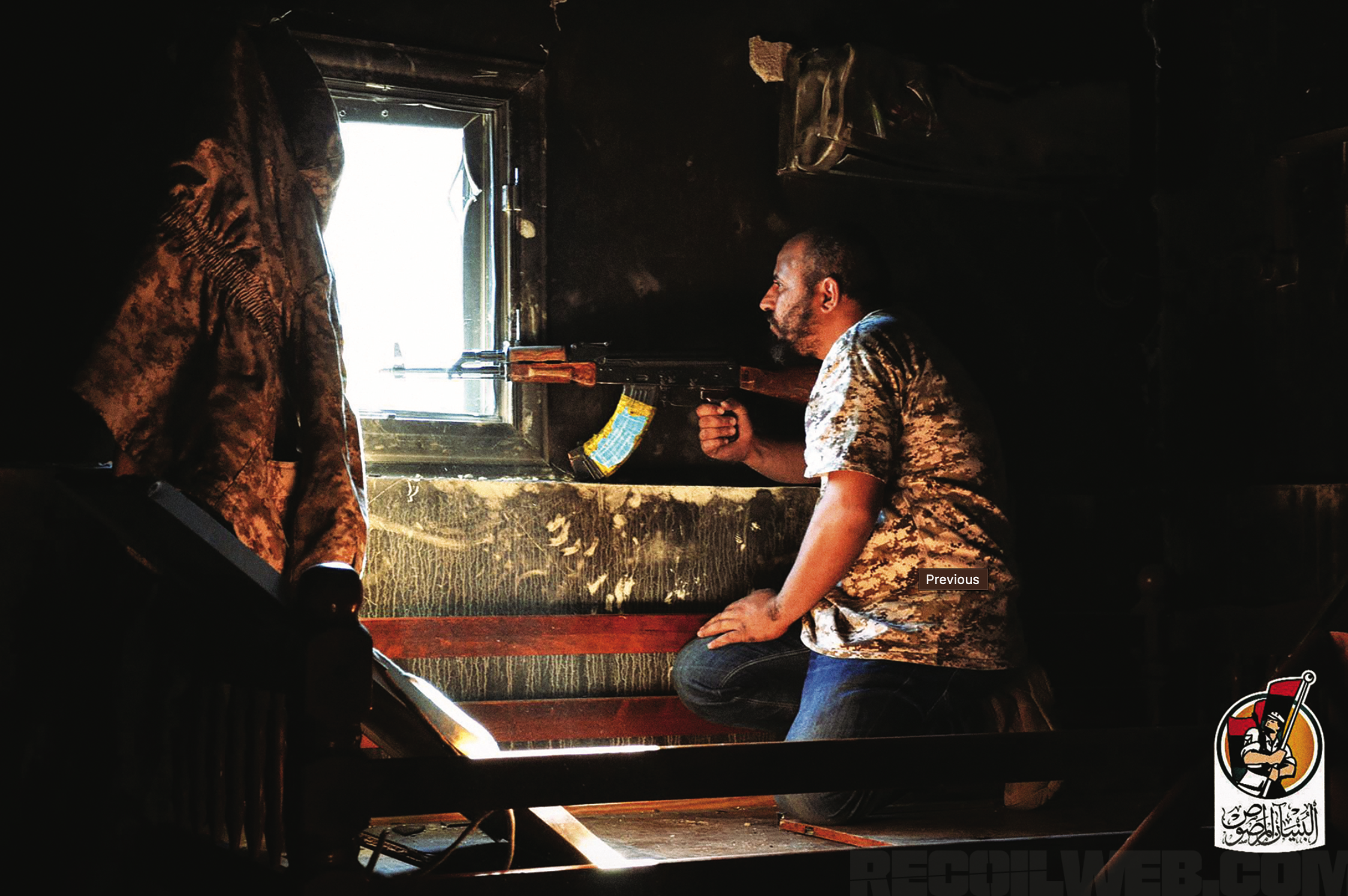
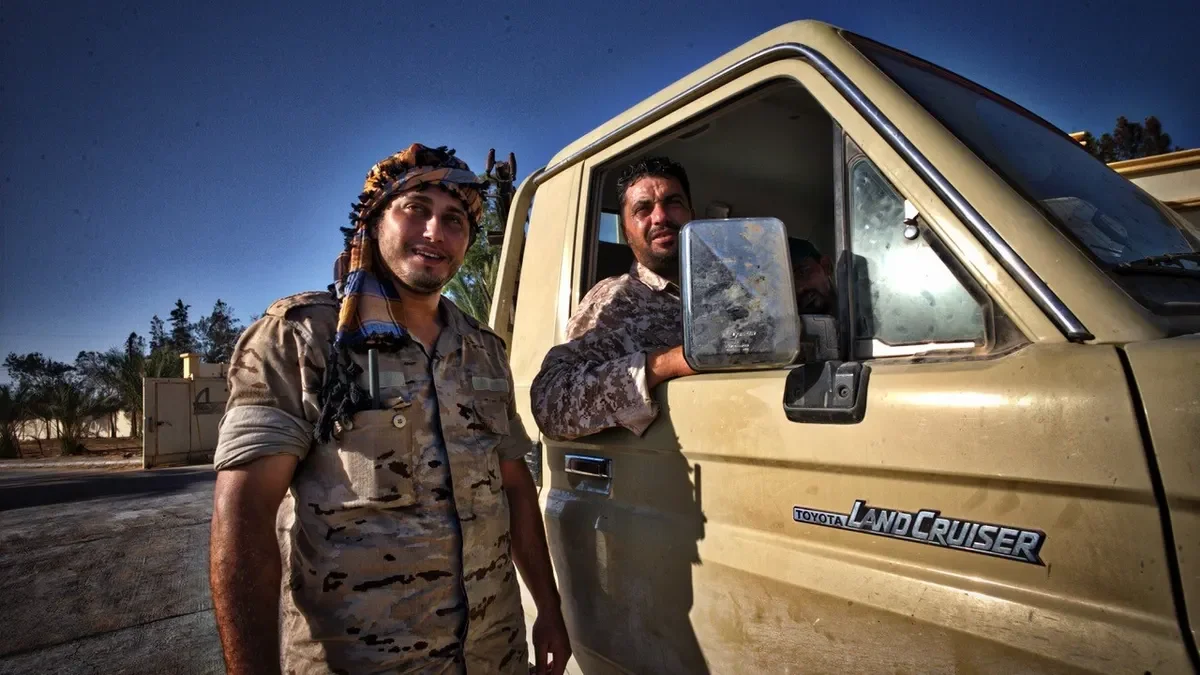
On the battlefield, the Bunyan Marsous militias were about 20% actual military veterans, with the rest eager young men using Toyota pickups, heavy machine guns, and anti-aircraft guns welded to the beds.
It was a giddy moment for the Libyans until they realized the extent of the booby traps left behind by “Daesh,” as they are called here. “They left them under carpets, behind doors, under dead bodies. They are everywhere. We need help with this,” al-Ghasry complained. Casualties were another factor in how aggressively the militia could prosecute the war. There are only 20 beds, three hours away in Misrata. Only after the hospital had flown patients to Turkey and made room could they launch another assault. It was the booby traps that wounded and killed the fighters in this phase.
ISIS was deploying its worst tactics as dozens of car bombs appeared, some abruptly pulling out of garages in front of advancing troops. ISIS had learned the hard way that driving up to roadblocks made them perfect targets for wire-guided missiles, so it stopped sending attackers from a distance. ISIS was deadly and adaptive. One day, a feel-good story published online about a popular snack shop in Sirte providing free meals for fighters triggered a car bomb attack the next day. ISIS parked a car outside the food center and killed scores of fighters.
To understand whether the agony of Sirte and ISIS’s nihilistic approach are foreshadowing further showdowns, I drive to the edge of Misrata to a dusty compound where Anwar Suwan holds court. Suwan is a local legend, the “logistics” man who put Gaddafi’s body in his meat locker in Misrata. It was his last act, which gave the world a gruesome view of what happens to strongmen who challenge the West. Tonight, in the cool Libyan night, everyone sits outside on carpets. Suwan checks his iPad and talks loudly on his phone. Suwan is known for great company and great food. He doesn’t disappoint tonight, as three-foot-wide dishes of sheep and beef are passed around.
Suwan occasionally breaks into stentorian tones and points his index finger in the air as if speaking on television. He is not just talking for my benefit, the curious Westerner; he is also entertaining his guests, wealthy businessmen, diplomats, soldiers, and friends. He bemoans the lack of a government, unity, or even a hopeful future for his country. A common theme is that of an oil-rich nation of only six and a half million people that fought a revolution for freedom but still can’t get it together after 42 years under Qaddafi and almost half a decade of freedom.
The men in starched jalabas sit on pillows and nod, then break off into unrelated conversations. It’s all very Libyan. Suwan breaks in, “Gaddafi was the state, and when they killed Qaddafi, they killed the state. We had no idea how to run a state.”
Around me are militia fighters, diplomats, Gaddafi loyalists, and soldiers. Technically, everyone here is for and against Gaddafi. And now they miss him. They viewed Libya as a unified force, a wealthy country with free education, health care, and other subsidies. Now there is only chaos. The problem is that outsiders continue to meddle in Libya’s economy and security. This includes Islamist, criminal, American, and European forces, all with different ideas. A government official who no longer has a government leans toward me and says, “The solutions should come from inside Libya, not from the outside.”
An older, chain-smoking military officer sitting to the left of me turns out to have been Qaddafi’s personal cameraman for 38 years. He is the spokesman for the third force based in Sabha. “Sabha is very poor, so it is criminal. We want to arrest smugglers, but when you hear their story, you let them go. They just want to feed their families. The petrol and water come from the south, but they get nothing back. Just the exhaust.” He laughs the dry, chain-smokers’ laugh.
I ask to take Anwar’s photo, but he tells me to wait and puts on his trademark wool hat. "People won't recognize me without my hat.” Everyone laughs. Nothing was solved tonight, but Suwan will make sure fighters get fed on the front lines in Sirte, using ladies to cook and pack individual lunches in Styrofoam boxes, then driven the three hours to the front lines.
Like I said, Libya is complicated.
SABRATHA
In February 2016, America struck again, this time with F-15E fighter-bombers based in Lakenheath, England, backed up by drones, dropping two bombs in a rural neighborhood south of Sabratha. The target was a “training camp,” in reality a halfway house near Sabratha, killing more than 49 of the 60 or so mostly Tunisian fighters, including Saifallah Ben Hassine and 36-year-old Tunisian Noureddine Chouchane.
The raid also killed two kidnapped Serbians, embassy communications officer Ladjana Stankovic and his driver, Jovica Stepic, in the bombing in the early hours of Friday morning. The Serbians had been kidnapped in November after they were rear-ended and then dragged off by kidnappers. The Serbian ambassador escaped. The Serbians were preparing to launch a raid using a Salafist Libyan militia called the Radha Brigade but did not communicate their location to the Americans. However, the U.S. continues to use Presidential findings and the authorization of U.S. military forces signed in 2001 as reason enough to engage terrorists in any location on earth. More importantly, this strike very publicly opened a fourth front against ISIS after Iraq, Syria, and Afghanistan.
ISIS took revenge by attacking the city of Sabratha, again a sleepy seaside town of 100,000 people, 40 miles west of the capital, Tripoli, and about seven hours (528 km) from Sirte.
The first thing I noticed when I wandered through the rubble of the ISIS target was that this “terrorist training camp” could have been in a rundown rural neighborhood in any desert city. It was neither remote nor even that far from neighboring houses. The men who lived here kept to themselves and kept their vehicles under the now-destroyed, twisted blue metal awnings. This was where the attackers in the Tunisia terror attacks on tourists were said to have trained.
I found a bizarre “ring of fire” training hoop stuck in a metal truck rim and evidence that yes, this was a rudimentary PE training camp used to funnel recruits from Tunisia in the west towards Sirte.
ISIS took revenge five days later, driving their trucks through town, attacking the police station, beheading 12 policemen, killing seven others, and then driving back off to the desert.
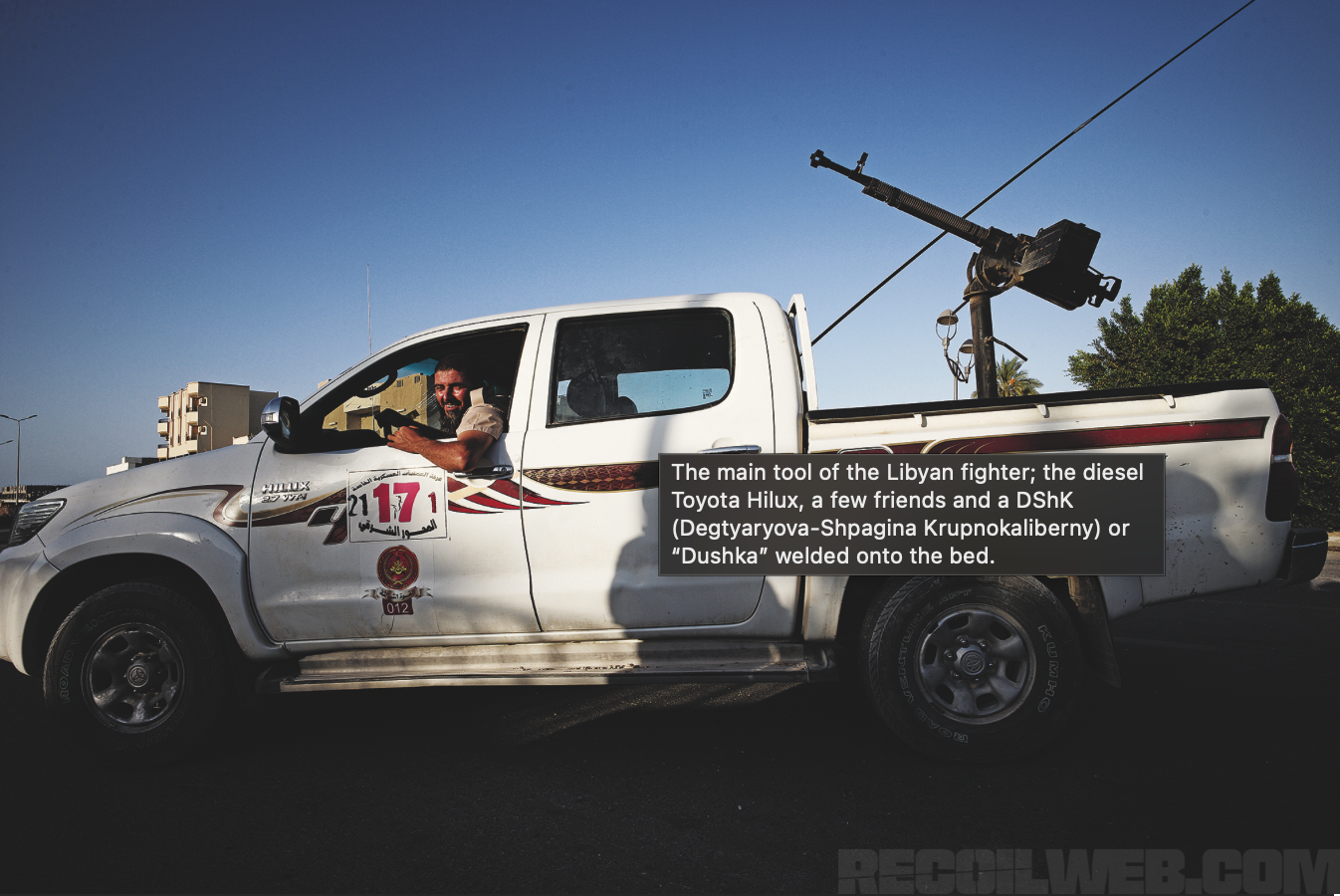
The ground militia moves in only when the bombng and sniping are done. ©RYP, all rights reserved
It was not the end of ISIS in Libya.
On 18 January 2017, bombs fell from the sky. Five B2 bombers were loaded with around 400 bombs, and the air crews were readying for a long flight. KC-10 Extenders and KC-135 Stratotankers coordinated between the East Coast of the US and Europe to refuel the bombers to the target and back. Three B2s took off, and two dropped 85 bombs as Reapers sent back real-time video. When the Libyan militia rolled up in their gunned-up Toyota Land Cruiser pickups, they found the bodies or pieces of around 90 Daesh.
During my last trip to Libya, ISIS had been cleared from Sirte, but every night on the Misratan news casts, ISIS sightings, complete with little computer graphic trucks with ISIS flags, would be displayed like a weather report. ISIS would pop up at checkpoints and be seen in the remote desert south of us. I arranged a trip to see if I could find Daesh in an old abandoned air base where they had been spotted. The vastness of the Libyan desert is impressive, but not as impressive as coming upon a massive space shuttle runway in the middle of nowhere. A few nomads had set up camp, and I asked if Daesh had come this way. Nope, no Daesh
